
Reviewed · PRIVATE CHRISTMAS TOURS
From LIlle or Bruges, Christmas Truce to Passchendaele Ypres 1 day WW1 private
The most striking part of this private Ypres tour is how it links famous names to actual ground. You hear about the Christmas Truce at Messines, the mine explosion at Hill 60, the Australian advance toward Passchendaele, and the enormous memorial at Tyne Cot while moving through the places where those events happened. Guide Søren brings strong subject knowledge, a clear manner, and a good sense of when to let the sites speak for themselves.
I like the door-to-door pickup, especially if you are based in Bruges, Lille, Ghent, or Arras. I also like the personal approach: if your family served in the region, the route can be adjusted around names, units, and places that matter to you. The main drawback is the price, $532.32 per person, and the long nine-hour schedule. Lunch is not included, and the day covers a lot of ground at a steady pace.
Key points to know before booking
- A private Ypres battlefield day with Søren: Your group travels alone, so you can ask questions freely and adjust the focus as the day develops.
- Messines links several powerful stories: Expect mine craters, the Christmas Truce site, and the crypt where Adolf Hitler was treated for wounds.
- Australian history gets careful attention: Polygon Wood, the Menin Road, Passchendaele, Hill 60, and the Australian advance all receive major attention.
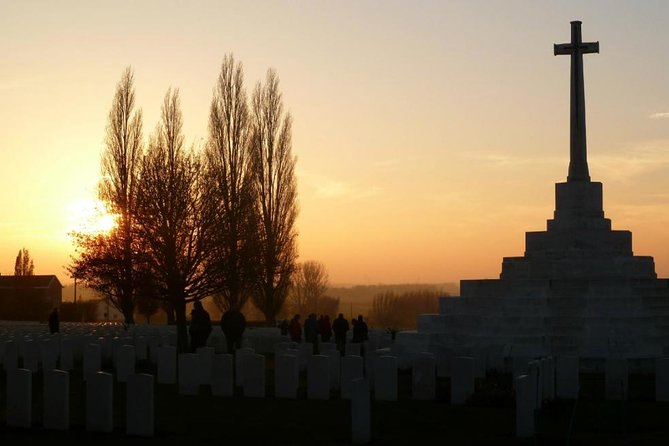
- Tyne Cot gives the day its largest scale: Around 12,000 soldiers are buried there, while the memorial records thousands of men with no known grave.
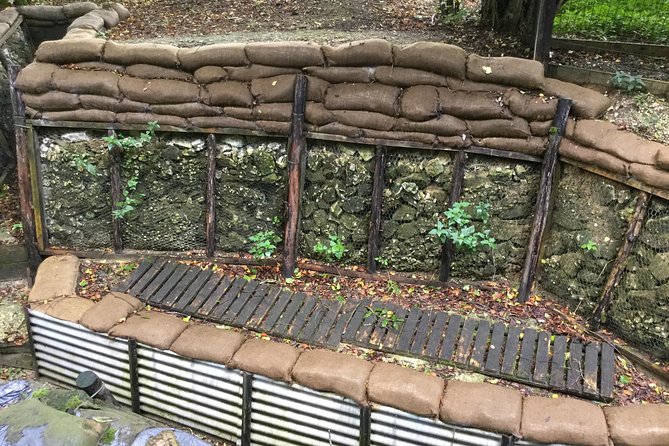
- Original trenches remain at Sanctuary Wood: This is one of the most unusual physical sites on the route.
- The itinerary is full but not rushed at every stop: You get about nine hours overall, with driving between sites and several walks of 15 to 45 minutes.
Why a private Ypres tour changes the experience
The Ypres Salient is not one battlefield with a single viewpoint. It is a wide area of roads, villages, woods, cemeteries, concrete shelters, mine craters, and memorials. On your own, you can visit the major names, but it is hard to understand how one position connects to the next.
A private vehicle and guide solve that problem. You can follow the Australian advance through the area, pause at a site that catches your attention, and ask for more detail about a regiment or battle. The route is also useful for family research. The provider specifically offers to tailor the day for people with relatives connected to the region.
Søren is the guide named in the experience information, and the strongest praise centers on his clear explanations, passion for the subject, thoughtful attention to detail, and light sense of humor. That mix matters here. The subject is serious, but nine hours of military history can become tiring if every stop is delivered in the same solemn tone.
This is not a large bus excursion. Only your group participates, which gives the day a more flexible feel. You can ask basic questions without embarrassment, or spend more time on advanced details if you already know the First World War well.
More Private Christmas Tours in the world
- New York City Christmas Lights Private Horse Carriage Ride
★ 4.5 · 237 reviews - Christmas Lights Tour of Madrid in Eco Tuk Tuk Private
★ 5.0 · 125 reviews - Christmas in New York: Private Holiday History Tour
★ 5.0 · 107 reviews
Messines Ridge and the Christmas Truce
Messines Ridge gets about two hours, making it the longest stop of the day. That is sensible. The area brings together several stories that are often treated separately in books and museums.
You hear about the Battle of Messines and see the mine craters left by underground charges. These huge depressions help explain the scale of the tunneling war. The ground itself becomes part of the lesson, rather than a backdrop for a speech.
The stop also covers the Christmas Truce, one of the most remembered moments of the First World War. The site gives you a chance to consider the contrast between informal contact across the lines and the violence that resumed afterward. A guide is especially useful here because the popular version of the truce can become overly neat and sentimental.
Another unusual detail is the crypt where Adolf Hitler was treated for wounds. It is a small but startling connection between the First World War and the later history of Europe. The tour does not treat it as a curiosity detached from the battlefield. Instead, it places the detail within the wider story of Messines.
Two hours gives Søren room to explain the fighting, show the physical remains, and answer questions. If you have family links to the area, this is one of the places where extra time could be especially useful.
Hooge Crater Cemetery and the Menin Road
Hooge Crater Cemetery is a short stop of about 15 minutes, so you should expect a focused visit rather than a long cemetery walk. The cemetery contains the grave of Pat Bugden VC, who was 20 when he received the Victoria Cross.
That detail gives a human scale to the military story. A medal citation can sound distant when read in a book. Standing beside the grave of someone so young makes the cost of the fighting harder to keep at arm’s length.
You will also be on the Menin Road, close to the former Australian gun pits used during the assault on Passchendaele. This is one of the route’s useful features: the guide does not discuss Passchendaele as an isolated battle. You see the road, the positions, and the direction of movement that connect the fighting together.
Because the stop is brief, this is not the place to expect a long, quiet cemetery visit. If Pat Bugden or the Australian units are important to your research, tell Søren early in the day so he can give the stop the attention it deserves.
The Australian headquarters and Polygon Wood
The itinerary also passes the site of Australian headquarters in September 1917 and discusses earlier fighting on the same ground in November 1914. This is a good reminder that the same stretch of land could be used, lost, and attacked again as the front shifted.
At Polygon Wood, you spend about 30 minutes walking through the woods and seeing concrete bunkers that remained from the fighting. You also visit the cemetery and the Australian 5th Division monument.
This stop works best when you pay attention to the relationship between the trees, the bunkers, and the road. Concrete structures can seem random without explanation. With Søren pointing out their role, they become evidence of defensive planning and the attempt to survive artillery fire.
The walk is short, but conditions underfoot can vary. The tour information does not give a detailed mobility assessment, so anyone with walking concerns should ask about the surfaces before booking. Most participants can take part, and service animals are allowed.
More one-day trips in the world
- London Christmas Day 1 Day Hop-on Hop-off Bus Tour
★ 4.0 · 15 reviews - Rovaniemi: Santa Claus Village & Santa Park in One Day
★ 4.5 · 23 reviews - Rovaniemi: Santa Claus Village and Santa Park Day Trip
★ 4.2 · 16 reviews
Hill 60 and the mine explosion
Hill 60 receives about 45 minutes and focuses on Captain Woodward and the 1st Australian Tunnelling Company. The central event is the mine explosion at 3:10 a.m. on June 7, 1917.
You see the crater linked to that blast. As at Messines, this makes underground warfare easier to grasp. Soldiers worked below the surface, often in dangerous conditions, trying to place explosives beneath enemy positions. The result was a sudden change to the ground above and a terrible shock for the men nearby.
This part of the tour will appeal to anyone interested in engineering, tunneling, or the less familiar side of the war. It also breaks up the cemetery visits with a physical site where the land itself records what happened.
The stop is not a full museum visit. Its value comes from the guide’s explanation and the chance to see the crater. I would listen closely here, since the timing, unit, and sequence of events are the details that make Hill 60 more than just another battlefield name.
Following the Australian advance toward Passchendaele
Between stops, the vehicle follows the line of the Australian advance. That driving time is not wasted. It helps you see how the various places fit together, especially if you have been reading about Passchendaele as a series of separate attacks.
The tour also drives through Zonnebeke along the line of the Australian advance. You will not spend a long walking visit at every point, but the movement between sites gives the day a useful sense of direction.
This is one reason a private vehicle matters. The route covers a broad area, and walking between all the major sites would not be practical in a single day. You get a connected tour rather than a collection of unrelated cemetery visits.
Tyne Cot Cemetery and the scale of loss
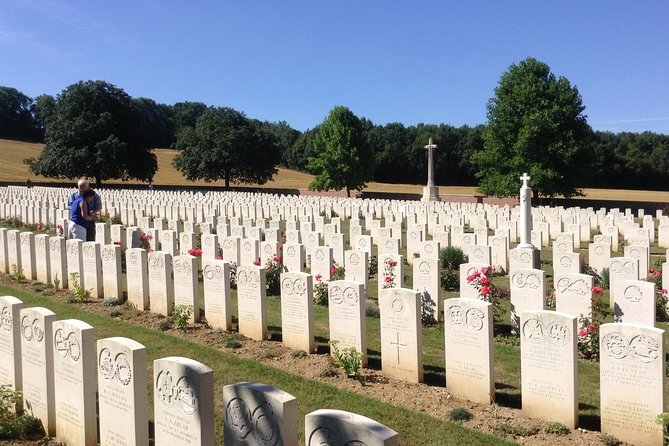
Tyne Cot Cemetery is given about 45 minutes. It is described as the largest Commonwealth War Graves Commission cemetery in the world, with about 12,000 soldiers buried there. Only around 3,000 have names, while many others are identified on the memorial to the missing.
The numbers are hard to absorb, so give yourself time to look carefully rather than rushing from one section to another. The cemetery’s size shifts the focus from individual stories to the scale of the war. Then two Australian Victoria Cross recipients buried there bring the experience back to particular lives.
Tyne Cot can be one of the day’s most powerful stops, but it may also feel emotionally heavy. You are moving from mine craters and battle positions into a carefully maintained burial place filled with names and absences. Søren’s role is important here because he can connect the cemetery to the operations you have already seen.
Forty-five minutes is enough for a meaningful visit, though not for every grave and inscription. If you have a specific family name, share it before the tour. The private format gives you a better chance of shaping the visit around that search.
John McCrae and In Flanders Fields
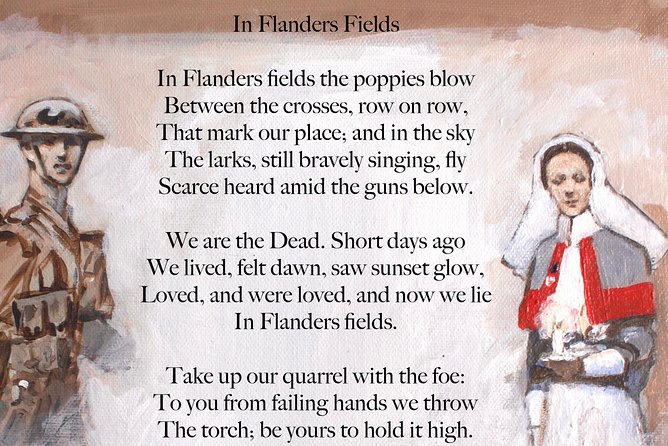
The John McCrae site is given about 30 minutes. Here you visit the hospital location where Lieutenant Colonel John McCrae composed In Flanders Fields.
This stop adds a literary thread to a day dominated by military operations and cemeteries. The poem is familiar to many people, but seeing the place connected with its composition gives the words a clearer setting. It also reminds you that the Ypres Salient was experienced through medical work, grief, writing, and remembrance, not only through maps and attacks.
Half an hour is a comfortable amount of time for this visit. It gives Søren room to explain McCrae’s connection to the site without turning the stop into a long lecture.
Menin Gate and the missing
The Menin Gate Memorial receives about 20 minutes. You hear how the memorial came about and about the roughly 55,000 names of missing men recorded there.
The gate is one of Ypres’s best-known memorials, but its meaning becomes clearer after you have spent the day among the battle sites. You have already seen where units fought and where soldiers were buried. At Menin Gate, the focus shifts to men who have no known grave.
A 20-minute stop is enough for an introduction and time to take in the names. If you want to attend the Last Post, check the timing separately before booking your day. One person who praised the experience specifically suggested staying for it if the schedule allows. The tour itself begins at 9:00 a.m. and lasts about nine hours, so the evening ceremony may require planning beyond the standard route.
Sanctuary Wood and original trenches
The final listed stop is Sanctuary Wood Museum, with about 40 minutes inside. Its main appeal is the presence of original First World War trenches.
This is a useful ending because it gives you something immediate and physical after the formal memorials. You can see the narrow defensive spaces where soldiers worked and waited, rather than only viewing later monuments or restored cemetery grounds.
Sanctuary Wood is also different from the open battlefield stops. The trenches help show the cramped conditions of frontline life. Forty minutes gives you enough time to look around and connect what you see with the earlier explanation of bunkers, artillery positions, and attacks.
Admission to Sanctuary Wood is included. The other listed sites have no separate admission charge, and bottled water is provided. Lunch is not included, so plan to ask about the day’s break or bring money for food. The supplied details do not specify a particular restaurant or lunch stop.
What the $532.32 price buys you
At $532.32 per person, this is not a budget battlefield outing. The value depends heavily on group size. For one person or two people, it is a significant expense. For a private group sharing the cost, the price may make more sense because you get a vehicle, hotel pickup, an English-speaking guide, and a full nine-hour route without strangers setting the pace.
You are paying for access to a connected explanation of the Ypres Salient, not just transport between cemeteries. The chance to tailor the day around family history is another important part of the value.
Pickup is offered from hotels and bed-and-breakfasts within a 66-kilometer radius of Ypres. Listed pickup options include Bruges, Lille, Arras, and Ghent Dampoort Station as the Ghent meeting point. This can save a great deal of planning, especially if you are staying in Bruges and do not want to arrange separate trains, local transport, and taxis.
The experience is offered in English. Confirmation is sent within 48 hours of booking, subject to availability. Free cancellation is available if you cancel at least 24 hours before the start time. Changes or cancellations inside that period are not accepted for a refund.
Who will get the most from this day
I would recommend this tour most strongly to:
- People with family connections to the Ypres Salient, especially Australian service history
- First World War readers who want to connect books and maps with actual places
- Couples or small groups who prefer a private guide to a large coach
- Visitors based in Bruges, Lille, Ghent, or Arras who want pickup and return transport
- Anyone who wants both major memorials and less formal sites such as craters, bunkers, and trenches
It may be less suitable if you want a relaxed sightseeing day with long meal breaks. The route is packed, and the subject matter is serious. It also may not suit you if $532.32 per person feels too high for a private day.
You should also be ready for several short walks and time outdoors. The tour information says most people can participate, but it does not promise completely level access at every battlefield or cemetery.
Should you book the Christmas Truce to Passchendaele tour?
Book it if you want a focused, private study of the Ypres Salient rather than a quick stop at Menin Gate and one cemetery. The strongest reasons are the range of sites, the attention to Australian operations, the flexibility for family history, and Søren’s clear, personal guiding style.
I would be especially inclined to book this from Bruges or Lille, where pickup removes much of the day’s transport work. If you are a First World War enthusiast, the combination of Messines, Hill 60, Polygon Wood, Tyne Cot, McCrae’s site, and Sanctuary Wood gives you a strong spread of military, personal, literary, and memorial history.
Skip it if you need a low-cost outing, dislike long days, or want plenty of unplanned time. For the right visitor, though, this is a serious and memorable way to understand why Ypres remains one of the key places of remembrance in Belgium.
FAQ
How long does the tour last?
The tour lasts approximately nine hours and begins at 9:00 a.m.
Where can pickup be arranged?
Pickup is available from hotels or bed-and-breakfasts within a 66-kilometer radius of Ypres. Listed locations include Ghent Dampoort Station, Lille, and Arras, as well as Bruges and other nearby areas.
Is this a private tour?
Yes. Only your group participates, so you travel with a private guide rather than joining a larger group.
Is lunch included?
No. Lunch is not included. Bottled water is provided.
Is admission included at Sanctuary Wood Museum?
Yes. Admission to Sanctuary Wood Museum is included. The other listed stops have no separate admission charge.
Can the tour be changed for family history?
Yes. The day can be tailored if you have family history connected to the Ypres region. The tour is offered in English, and guide Søren can adjust the focus around your interests.
Just added for this season in the world
- Wrocław: Christmas Cruise by Heated Ship with Mulled Wine★ 3.6 · 60 reviews
- Christmas Cruise in Wrocław 45 Minutes on the Old Town★ 4.0 · 128 reviews
- Quebec: Christmas Interactive Walking Tour of New France★ 4.3 · 7 reviews
- Stockholm: All-You-Can-Eat Christmas Buffet Cruise Livemusic★ 4.3 · 7 reviews
- From Basel: Colmar Christmas Market & Wine Tasting Private Tour★ 5.0 · 4 reviews
- Excursion to Colmar and Ribeauvillé to the Christmas market★ 4.5 · 3 reviews
- Private Christmas Walking Tour of Frankfurt with Bethmännchen★ 5.0 · 5 reviews
- Private Munich Christmas Walking Tour + Glühwein & Snacks★ 4.5 · 4 reviews
Private Christmas Tours, compared.

New York City Christmas Lights Private Horse Carriage Ride
Read our review →
Christmas Lights Tour of Madrid in Eco Tuk Tuk Private
Read our review →
Christmas in New York: Private Holiday History Tour
Read our review →
London Christmas Lights Private Tour by Traditional Black Cab
Read our review →


Private Christmas Tour in Münster including Glühwein
Read our review →Browse the lists this tour appears in