
Reviewed · CHRISTMAS TOURS
Wien: Tour with locals on the trails of the Christmas Tree
Vienna’s Christmas tree tradition has a better story than you might expect. This two-hour walk follows it from the Anker Clock through the old center, linking palace buildings, city life, and the first Viennese Christmas trees. Guide Nicole also uses historical pictures to make the people and places easier to picture.
I like the small groups of 10 or fewer, and I like the chance to finish near an Advent market with a warm punch. The walk also gives you useful background on 19th-century Viennese society, not just a string of decorated trees. The main consideration is focus: if you want a fast, purely festive market tour, the detailed history may feel like a lot, and one English-language participant found the connections between Vienna’s past and its trees hard to follow.
Key points to know before you book
- A Christmas tree story with a social twist: Learn how the custom reached Vienna and how local society reacted to it.
- A palace-to-palace walk: The route uses Vienna’s illuminated historic center as its setting, with stops near the Albertina and Rathausplatz.
- Guide Nicole leads the experience: Her English has been praised, though the pace and clarity may vary depending on the group and language.
- A compact two-hour outing: You get a focused introduction to central Vienna without giving up half a day.
- A market finish: During Advent, you can end at Am Hof or Rathausplatz and buy a punch or browse seasonal goods.
- Plan for winter weather: The tour runs in rain, snow, or sunshine, so warm layers and good shoes matter.
Why Vienna’s Christmas tree makes a useful tour subject
At first glance, a tour about Christmas trees may sound narrow. In Vienna, it becomes a way to look at changing customs, class, religion, and city life.
The main story concerns how the Christmas tree came to Vienna and how Viennese people discovered its appeal. You also hear about the tension between the tree tradition and Catholic churches. That gives the walk a sharper historical question: how did a decoration associated with one cultural setting become part of Christmas in a strongly Catholic city?
The subject works best because it is tied to real places. You are not sitting through a general lecture in a room. You are walking among palaces, public squares, and grand city buildings while the guide explains what happened there and what Vienna was like in the 19th century.
Guide Nicole also places the tree in its social setting. That means the tour is not only about when the first tree appeared. You hear about the people who introduced or encountered the custom, the community around them, and what belonging to Viennese society meant at the time.
I find that approach useful for your first or second day in Vienna. It gives you a story to carry into later sightseeing. When you see Christmas decorations in the center afterward, you have more context than simply knowing where to find the best market.
More Christmas trips in Vienna
- Vienna: Christmas & New Year’s Concert in St. Peter’s Church
★ 4.6 · 763 reviews - Vienna: Christmas Photoshoot with a Pro Photographer
★ 4.3 · 241 reviews - Christmas and New Year Concert at St. Peter’s Church in Vienna
★ 4.5 · 155 reviews
Starting between the Anker Clock and Marriage Fountain
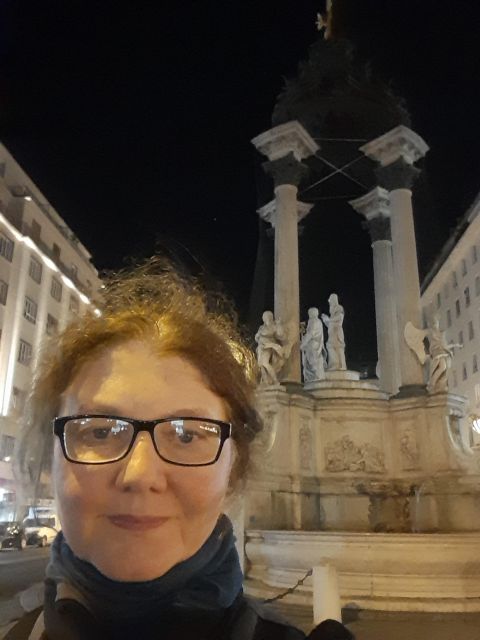
The meeting point is between the Anker Clock and the Marriage Fountain. This places you in the central historic district, rather than at a hotel or outlying station.
The Anker Clock is a practical starting landmark, but it also sets the tone for the walk. You begin among old Vienna’s streets and architecture, then move through the city center as the guide builds the Christmas tree story. You should arrive in comfortable shoes and warm clothing, since the entire experience takes place outdoors.
The tour lasts two hours. That is long enough for a substantial walk and several explanations, but short enough to fit before dinner, a concert, or another Advent market visit. Keep in mind that the time includes walking and guided stops, so it is not a full architectural tour of every building you pass.
The group is limited to 10 people, or it may be only your own party. That size matters in a city center. You can hear the guide more easily than in a large group, and you have a better chance to ask about a particular building or historical detail.
Walking through Vienna’s historic center
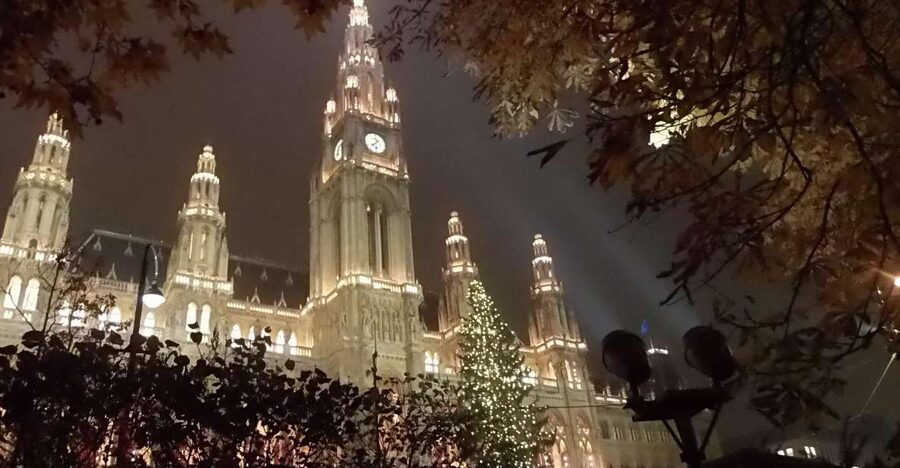
The central walk takes about an hour and a half, making it the heart of the experience. The route moves from palace to palace through Vienna’s decorated streets and squares.
Expect the guide to connect architecture with the Christmas tree tradition. The buildings are not simply a backdrop. Their owners, residents, and social circles help explain how the custom spread through Vienna. The setting also gives you a practical introduction to the city center, with several famous sights placed into one walk.
Nicole uses historical pictures showing people and places connected to the subject. That is a worthwhile touch. Old buildings can look polished and familiar today, while a picture of the people who lived there can make the social story easier to grasp.
The strongest part of the route appears to be its wider view of Vienna. You are not asked to memorize dates for their own sake. Instead, you learn how a new Christmas habit fit, or failed to fit, into Viennese customs and Catholic life.
There is one clear limit. The tour can move quickly through a lot of history. One participant found it difficult to connect the detailed Viennese background with the Christmas tree theme. Another local participant felt the guide spoke with too few pauses and became mentally tiring after a while.
That is useful advice. If you like history talks, stay engaged and ask questions when a connection is not clear. If you prefer a light seasonal stroll, you may find the amount of explanation demanding. The small group helps, but the guide’s pace still shapes the experience.
The Albertina stop and grand city views
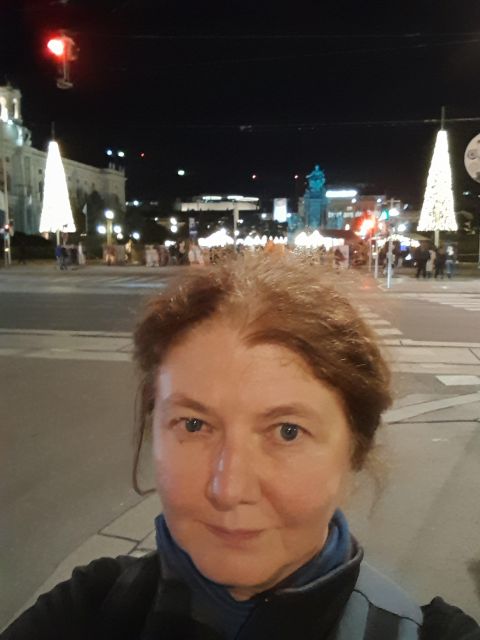
The route includes a 15-minute guided stop at the Albertina Museum. You should not expect a full museum visit or time to see its collection. The stop is part of the outdoor walking tour.
The Albertina is valuable here because it brings together Vienna’s royal and artistic identity. Its architecture gives the guide another strong setting for discussing palace life, social rank, and the city’s public image. You can appreciate the building and surrounding city views while keeping the focus on the Christmas story.
This is also a good example of how to judge the tour’s format. If you want to enter major museums, see paintings, or spend time inside palaces, this walk will not replace those visits. If you want to understand how Vienna’s historic center fits together while moving between sights, the stop adds useful structure.
You may want to photograph the exterior before the group moves on, since the visit is brief. The tour is built around explanation and movement, not long pauses at each landmark.
Same town, a different sort of December evening:
- Vienna: Christmas Markets Tour
★ 4.3 · 99 reviews - Christmas Concerts in Capuchin Church
★ 4.5 · 81 reviews - Christmas Market Vienna Tour
★ 4.0 · 53 reviews - Private Christmas Markets Walking Tour Vienna
★ 5.0 · 31 reviews
Rathausplatz and Vienna’s Advent atmosphere
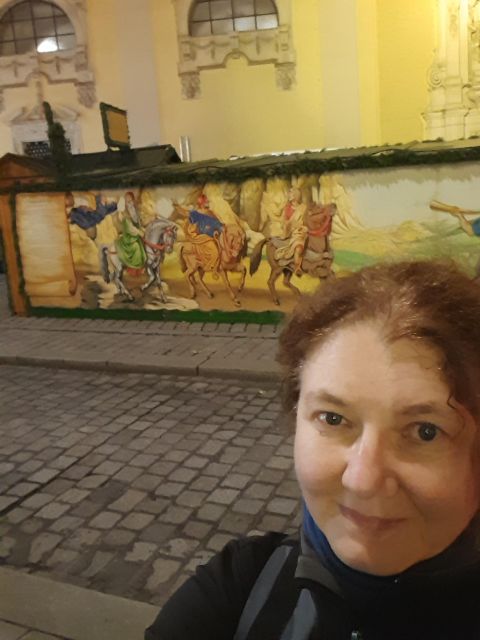
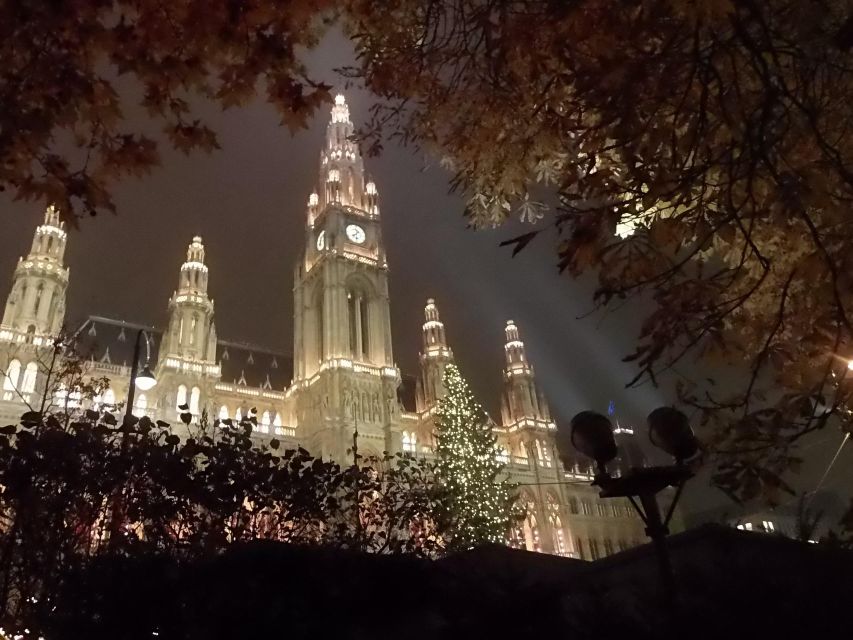
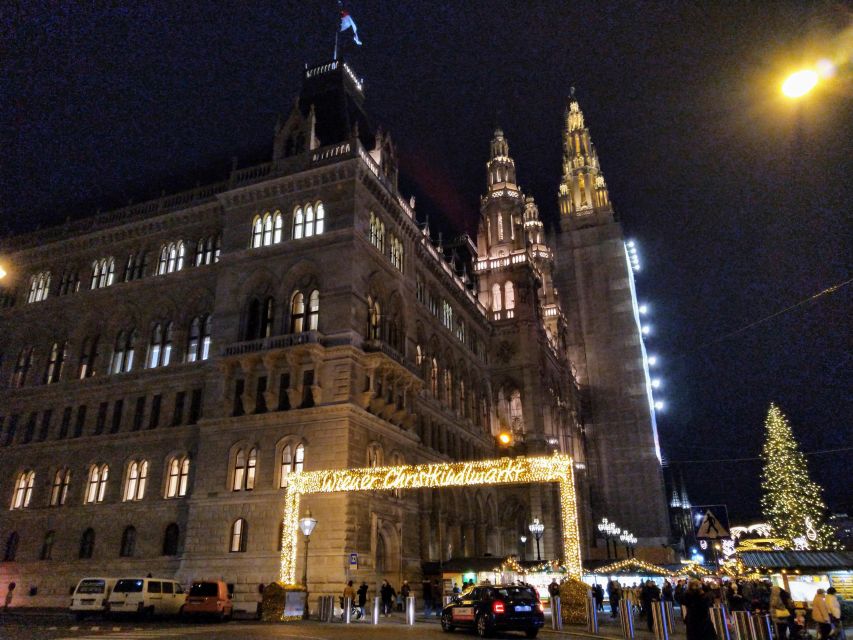
Rathausplatz is one of the natural high points of a Christmas-season walk. The square is associated with Vienna’s Advent setting, and its lights and seasonal activity give the final part of the tour a more festive feel.
The route includes a 15-minute guided stop here. During Advent, you can finish near the market and have a punch while looking through seasonal goods. Food and drinks are not included, so budget separately for anything you buy.
This optional market time is one of the tour’s practical strengths. You get the history first, then have the freedom to continue browsing at your own pace. You do not have to spend the rest of the evening with the group.
The tour description allows a choice of ending at Am Hof or Rathausplatz. The stated finish point is Am Hof, at Am Hof 1598/1, 1010 Vienna, but you should confirm your preferred ending with the guide. That flexibility is useful if you already plan to meet friends, eat nearby, or visit a different market.
A short market stop also keeps expectations realistic. This is not a dedicated food tour, and it does not include tastings. Think of the punch and shopping as an optional way to extend the evening after the guided walk.
The unusual church question
The story includes conflict between the Christmas tree and Catholic churches, but churches are not normally presented as formal stops. The exception is Peter’s Church, which is on the way and can be discussed if you specifically want to learn about it.
That choice suits the tour’s theme. The guide can address the religious background without turning the experience into a church sightseeing circuit. If Peter’s Church interests you, mention it clearly at the start or during the walk.
You should not book this expecting interior visits to several churches. The focus remains on the Christmas tree, Vienna’s historic center, and the social setting around the tradition.
How much history should you expect?
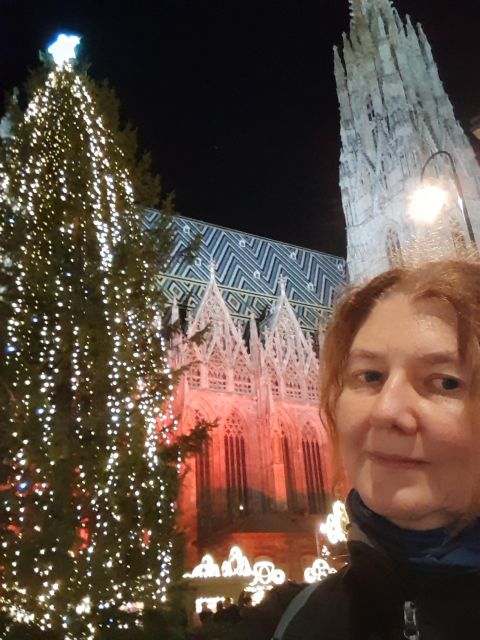
The tone is more historical than decorative. You will hear about Vienna in the 19th century, the people tied to the Christmas tree’s arrival, and the city’s social structure.
That broader context is one of the best reasons to choose this tour. A Christmas market can show you what Vienna celebrates today. This walk asks how those celebrations developed and who helped shape them.
Guide Nicole has received strong praise for her subject knowledge, warm manner, and excellent English from some participants. She has also adapted to individual interests, including requests to hear more about Vienna beyond the tree itself. One German-speaking participant felt the two hours offered a surprisingly broad view of the city and appreciated receiving suggestions for later sightseeing.
The picture is not entirely uniform. One English-speaking participant found the language less clear, while another felt the talk needed more pauses. Because the experience is built around spoken explanation, this matters more here than it would on a simple photo walk.
If English is not your first language, consider booking in the language in which you are most comfortable. The tour is offered in English, Italian, and German. If you enjoy asking questions, the small group format should make that easier.
What the $62 price gives you
At $62 per person, this is not the cheapest way to see Vienna’s Christmas markets. You are paying for a live historical guide, a small group, and a themed route rather than admission to a museum or a drink-and-snack package.
I see the value in three parts. First, the subject is specific. You are not paying for a broad city walk that only gives the Christmas tree a passing mention. Second, the tour links several central areas in one outing. Third, a group of no more than 10 can feel more personal than a large seasonal tour.
The price makes more sense if you care about history and want a guide to explain what you are seeing. It makes less sense if your main goal is shopping, photographs, or sampling market food. You can visit Advent markets on your own, but you will not get this particular story or the guide’s historical pictures.
Food, drinks, hotel pickup, and hotel drop-off are not included. You should also factor in the cost of a punch or any market purchases at the end.
Weather, access, and what to wear
The tour runs rain, snow, or sunshine. Vienna in Advent can be cold, and much of the experience takes place outdoors, so wear warm layers, comfortable clothes, and shoes you can walk in for two hours.
The activity is listed as wheelchair accessible. Since the route uses city streets and public areas, you should still contact the provider if you have specific mobility needs or want to confirm the route for your date.
There is no hotel pickup or drop-off. You make your own way to the Anker Clock and leave from the chosen ending point. That is simple if you are already staying in central Vienna, but you should allow time to find the meeting spot between the Anker Clock and Marriage Fountain.
The tour takes place in winter conditions, so do not treat the weather policy as a minor detail. A warm coat, gloves, and footwear with good support will make the history easier to enjoy.
Who will enjoy this Christmas walk?
I would recommend it to you if you like local stories, historic buildings, and a guide who explains how customs develop. It suits couples, families with older children, solo visitors, and small groups that want a focused introduction to central Vienna.
It is especially useful early in your stay. The route gives you a feel for the center, then leaves you with ideas for later stops. You can also ask for suggestions for the next few days, as the guide has offered that kind of practical help.
You may want a different activity if you want a relaxed market crawl, lots of free time for shopping, or a tour centered on food. The historical material takes up much of the two hours, and the Christmas market portion comes mainly at the end.
The tour also suits repeat visitors who want a fresh angle on familiar streets. Even people who already know Vienna can learn something new about the tree tradition and 19th-century city life.
Should you book the Christmas tree tour?
Book this walk if the idea of tracing an everyday Christmas custom through Vienna’s palaces and streets interests you. The small group, historical pictures, flexible market finish, and guide Nicole’s personal approach give it more substance than a basic lights-and-markets stroll.
Go in ready for a talk as well as a walk. The amount of history can feel heavy if you want only seasonal atmosphere, and the guide’s speaking pace or English clarity may not suit everyone. For the right audience, though, $62 buys a focused story, a useful city-center orientation, and a pleasant way to finish near an Advent market with your own punch.
FAQ
How long does the Vienna Christmas tree tour last?
The tour lasts two hours. The historic center portion takes about 1.5 hours, followed by 15-minute guided stops at the Albertina Museum and Rathausplatz.
Where does the tour meet?
The meeting point is between the Anker Clock and the Marriage Fountain in central Vienna.
Where does the tour finish?
The listed finish point is Am Hof 1598/1, 1010 Vienna. During the tour, you can choose to finish at Am Hof or Rathausplatz.
Is the Advent market visit included?
The walk includes access to the Advent market area at the end, but food and drinks are not included. You can buy a punch and browse seasonal products separately.
What languages are available?
The live guide is available in English, Italian, and German.
How large is the group?
The tour is limited to 10 participants. It may also operate with only your own group.
Is the tour wheelchair accessible?
Yes, the activity is listed as wheelchair accessible.
What should I wear?
Bring comfortable shoes, warm clothing, and comfortable clothes. The tour operates in rain, snow, or sunshine.
Can I cancel or pay later?
You can cancel up to 24 hours before the activity for a full refund. You can also reserve now and pay later.
Just added for this season in Vienna
- Vienna: Festive Season and New Year’s Eve Waltz Workshop★ 5.0 · 3 reviews
- Christmas Walk Vienna : 5 Markets & Old Town in 3h (EN/DE)★ 5.0 · 4 reviews
- Christmas at Belvedere: 3hr Private Tour of Upper Palace & Market★ 5.0 · 4 reviews
- Small-Group Christmas Day Trip to Hallstatt from Vienna★ 5.0 · 5 reviews
- Vienna Guided Christmas Market Food and Drink Tour★ 5.0 · 10 reviews
- Christmas in Vienna – Private Walking Tour with Glühwein Mug★ 4.5 · 4 reviews
- Vienna: Festive Advent, Christmas and New Year concerts★ 5.0 · 3 reviews
- Salzburg Christmas Markets Day Trip from Vienna★ 5.0 · 4 reviews
Christmas Tours, compared.
London by Night Bus Tour with Christmas Lights and Live Guide
Read our review →
Dyker Heights Christmas Lights & Skyline View Bus Tour
Read our review →
London Christmas Lights Tour by Vintage Bus Open Top
Read our review →
Browse the lists this tour appears in