
Reviewed · CHRISTMAS WALKING TOURS
Advent in Zagreb – guided walking tour
Zagreb’s Advent season gives this walking tour its special flavor. You move from the Christmas market on Ban Jelačić Square to the Cathedral, Dolac Market, Tkalciceva Street, and the old lanes of Gornji Grad, with a funicular ride included. The route connects Zagreb’s main sights without wasting time on transport, and the 15-person limit should keep the walk reasonably personal.
I like the mix of everyday Zagreb and grand city symbols, from produce stalls at Dolac to St. Mark’s Church and Lotrščak Tower. I also like that guides such as Kristina and Chris are praised for making the past easy to follow and for offering practical shopping ideas. The main drawback is the pace: several stops last only five minutes, and the cobbled streets, stairs, and changing December weather call for decent shoes and a warm coat.
Key points to know before booking
- Advent market opening: You get about 30 minutes among Zagreb’s Christmas stalls, a useful introduction to the city’s December mood.
- A compact old-town route: The walk links Ban Jelačić Square, the Cathedral, Dolac, Tkalciceva Street, and Upper Town in one outing.
- A guide-led look at Gornji Grad: Expect Kamenita vrata, St. Mark’s Church, the Museum of Broken Relationships, a viewpoint, and Lotrščak Tower.
- Funicular ride included: Your ticket is covered, though food, drinks, public transport, and tips are extra.
- Small-group format: The maximum group size is 15, a good fit if you want to ask questions.
- Weather matters: The tour runs in all conditions, so dress for cold, rain, or slippery streets.
Why Zagreb Advent works well on foot
Zagreb is a city where the main sights sit close together, but they do not all feel alike. The lower city has broad public spaces, market life, and busy café streets. The Upper Town feels older and quieter, with stone gates, steep steps, and churches tucked into compact squares.
This tour uses that contrast well. You begin in the city center, then work uphill toward Gornji Grad before returning to the starting point. For a first look at Zagreb, that is a sensible shape. You get an orientation without spending half the morning figuring out tram routes or reading maps.
The walking time is listed as about two to three hours. The named stops account for roughly 100 minutes, with the rest used for moving between places, listening to the guide, and taking in the route. That means the experience is more than a quick photo circuit, but it is not a slow, in-depth museum tour either.
You should expect a moderate level of physical effort. Zagreb’s Upper Town includes slopes and stairways, and Zakmardijeve stube is specifically part of the route. Comfortable shoes are important, especially if rain or winter frost makes the pavement slick.
More Christmas Walking Tours in the world
- Brooklyn: Dyker Heights Christmas Walking Tour
★ 4.5 · 249 reviews - London: Tootbus Christmas Lights Tour incl walking tours
★ 3.6 · 227 reviews - Quebec City: Christmas Magic Walking Tour in Old Quebec
★ 4.7 · 146 reviews
Starting at Ban Jelačić Square
The meeting point is Trg bana Josipa Jelačića, Zagreb’s central square. This is a practical place to begin because it gives you an immediate sense of the city’s layout. It also makes the tour easy to reach if you are already staying in central Zagreb.
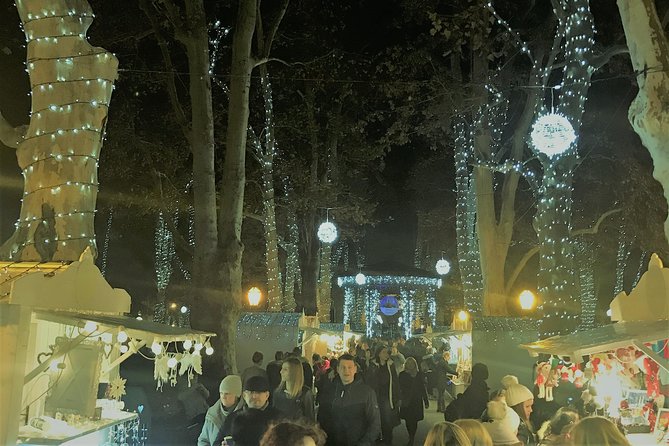
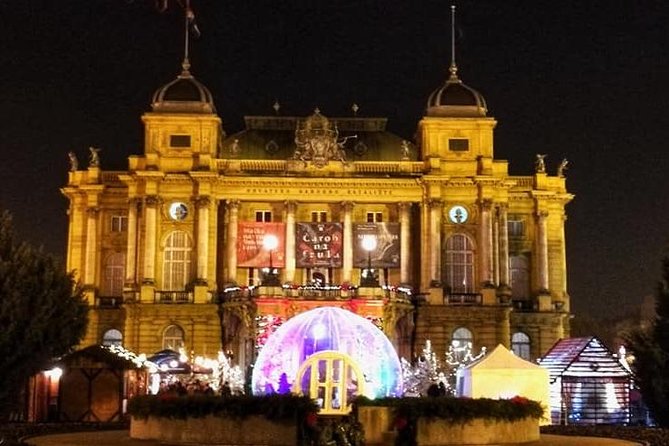
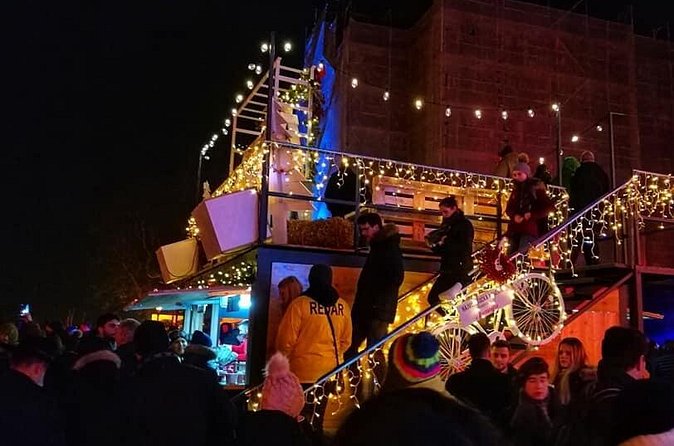
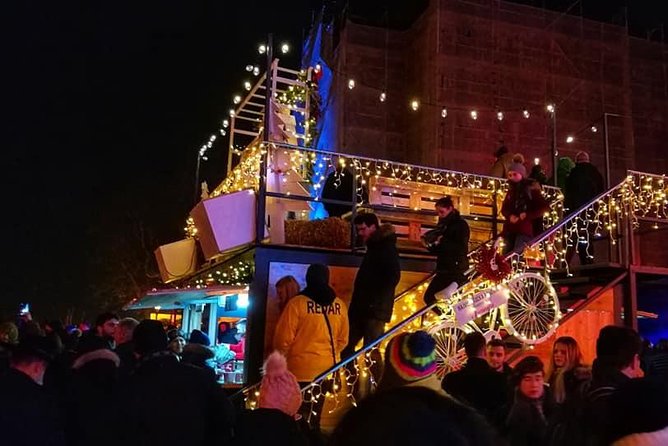
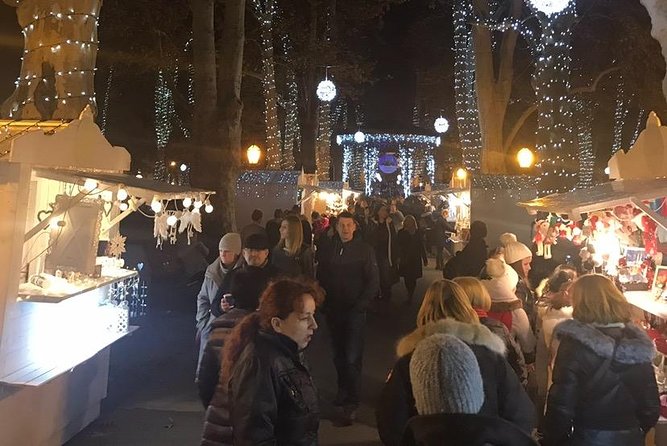
The first stop is Advent Zagreb, with around 30 minutes set aside for the Christmas market. In December, this is the part of the walk that brings seasonal color, food smells, decorations, and stalls into the city center. You have enough time to look around and get ideas for later shopping, though not enough for a long meal or a full market crawl.
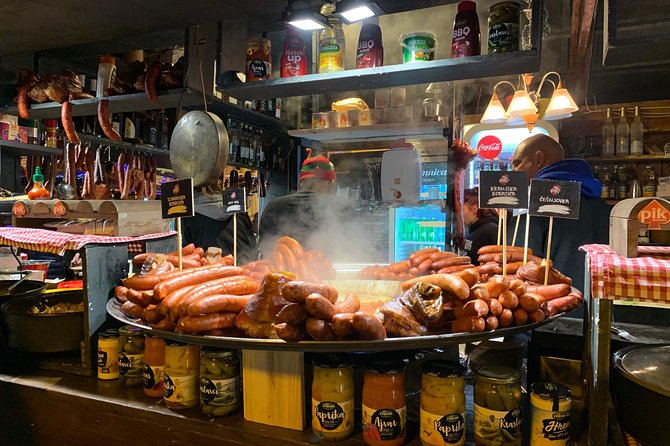
Food and drinks are not included, so budget separately if you want a warm drink or a snack. The short market visit is best viewed as an introduction, not a dedicated food tour. I like that arrangement for a first-day walk, since the guide can show you where things are before you return later at your own pace.
The tour is offered in English. The group cap of 15 is useful here, since a crowded market can make a large group hard to manage. It is still worth arriving ready to listen closely, especially if the square is busy.
From Zagreb Cathedral to Dolac Market
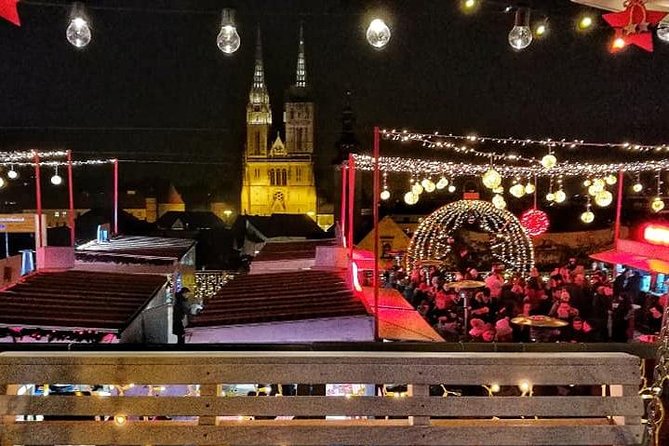
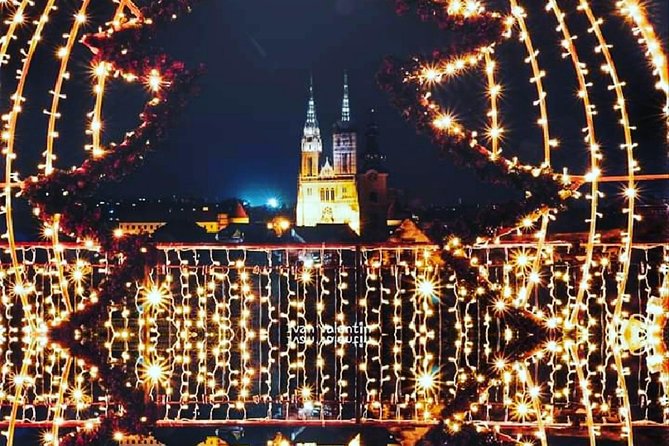
The Cathedral of Zagreb is next, with about 10 minutes allowed. It is the key symbol of the Kaptol area and gives the route a clear architectural landmark after the festive market. A short stop works well for orientation and explanation, but you should not expect a long interior visit or a detailed architectural study based on the stated timing.
The Cathedral is also a reminder that Zagreb is not only about Christmas decorations and café streets. The city’s religious and civic center developed in layers, and the guide can help place Kaptol within that larger picture.
From there, the route moves to Dolac Market for about five minutes. Dolac is the city’s main farmers market, and this brief stop adds a useful slice of daily life. You can see the contrast between the seasonal stalls of Advent and the regular market economy that serves local residents.
Five minutes passes quickly. If you want to buy produce, browse every stand, or stop for a longer look, you will need to return on your own. Still, the stop is worthwhile because it keeps the walk grounded in ordinary Zagreb rather than turning it into a parade of monuments.
The market can also help you understand the city’s geography. Zagreb’s center is not one single polished district. It is a working place where shopping, food, public squares, churches, and old streets sit close together.
A short look at Tkalciceva Street
Tkalciceva Street receives about five minutes. It is the main bar and restaurant street, so this is your chance to spot the area where you may want to spend an evening after the tour.
The stop is more about orientation than dining. You will not have time for a full meal within the tour schedule, and food and drinks are separate. I would note the restaurants or cafés that catch your eye, then return later when you can choose a table without watching the clock.
This is one of the tour’s practical strengths. A guide can point out the streets that look most useful for your own evening plans, saving you from relying only on a map. The walk also gives you a sense of how close Tkalciceva is to Dolac and the Upper Town.
More guided outings in the world
- London: Christmas Lights Bus Tour With Live Guide
★ 4.0 · 5,410 reviews - London by Night Bus Tour with Christmas Lights and Live Guide
★ 4.5 · 2,040 reviews - Dyker Heights Christmas Lights Guided Tour
★ 4.5 · 920 reviews - London Christmas Lights Guided Tour With Christmas Music
★ 5.0 · 118 reviews
The longer visit to Gornji Grad
The largest portion of the tour, about 45 minutes, takes place in Upper Town, or Gornji Grad. This is where the walk shifts from central orientation to Zagreb’s oldest city area.
The route includes several notable places:
- Kamenita vrata, the Stone Gate
- St. Mark’s Church
- The Museum of Broken Relationships
- A Gradec viewpoint
- Lotrščak Tower
That is a lot to cover in 45 minutes, so expect a guided introduction rather than extended visits inside each attraction. Admission tickets are not listed for these stops, and the tour information does not promise entry into the Museum of Broken Relationships or Lotrščak Tower. If either museum or tower is a priority, treat the walk as a preview and plan a separate visit.
Kamenita vrata is one of the route’s most memorable points because it is a surviving historic gate built into the old town. St. Mark’s Church is known for its distinctive tiled roof, which makes it an obvious stop even on a short walk. The Gradec viewpoint adds a chance to look across the city, while Lotrščak Tower helps explain how the old settlement was protected and watched.
The Museum of Broken Relationships gives the route a modern, personal counterpoint to its older churches and fortifications. Even a short explanation can help you decide if you want to return for a longer visit. This mix is one of the best reasons to choose the tour: you are not seeing only monuments, and you are not spending the entire time on modern nightlife either.
The Upper Town is also where your shoes matter most. Some streets are uneven, and the route includes steps and uphill sections. In December, daylight can fade early, and wet stone can be slippery. The tour runs in all weather, so bring a coat that handles rain and wear footwear with a firm sole.
Riding the funicular and taking Zakmardijeve stube
A funicular ticket is included, which adds useful variety to the walking. Zagreb’s funicular connects the lower and upper parts of the city and is one of the simplest ways to understand the relationship between the two areas.
The exact place in the route where the ride occurs is not specified, so you should think of it as a planned part of the outing rather than assume a particular boarding point. It saves your legs from one section of the climb and gives you a short change of pace.
Zakmardijeve stube, one of the stairways connecting Upper and Lower Town, is also included and takes about five minutes. This is a small stop, but it shows how Zagreb’s two levels link together away from the main roads. You get a better feel for the city’s shape by walking one of these stair routes instead of staying only on broad streets.
The combination of funicular and stairs may seem contradictory, but it makes sense. The ride handles one connection while the stairway offers a more direct look at how people move between the old and lower parts of town. You should be ready for both.
What the guide adds
A licensed local guide is included, and the two named guides associated with the experience are Kristina and Chris. The available feedback gives particular weight to their personal style: Kristina is described as passionate about Zagreb and its cultural heritage, while Chris is praised for making the city’s history enjoyable and easy to learn.
That matters because this route contains many short stops. A guide has to supply the links between them. Without context, Dolac is simply a market, Tkalciceva is simply a restaurant street, and the Upper Town is a string of attractive buildings. With a good guide, you can understand how those places fit into Zagreb’s daily life and past.
Kristina is also noted for sharing shopping ideas and pointing out less obvious places around the city. That is useful during Advent, when you may want more than the standard souvenirs. The information does not guarantee that Kristina will lead your particular departure, so consider the guide’s personality a likely strength of the provider rather than a promised assignment.
The small maximum group size should help. Fifteen people is large enough to keep the tour social, but small enough for questions to be practical. If you prefer a private experience or a very slow pace, this is not that. It is a compact group walk with a set route.
Is $30.23 a fair price?
At $30.23 per person, the value depends on what you want from the morning or afternoon. You are paying for a licensed guide, a planned route, the funicular ticket, and the convenience of seeing several central areas in one outing. You are not paying for meals, museum entry, public transport beyond the included funicular, or gratuities.
For a first visit, I consider the price reasonable if you value orientation and local explanation. The walk covers the major central areas, and it can save you time deciding what deserves a longer visit later. The market, cathedral, old town, viewpoint, and restaurant street give you a useful first map of Zagreb.
The value is weaker if you mainly want entrance to attractions or a food experience. The schedule allows only brief pauses at Dolac and Tkalciceva, and the Upper Town section covers several sights in less than an hour. Independent visitors who enjoy researching sites may prefer to explore slowly and spend the same money on a museum ticket or meal.
Group discounts may be available, which could improve the price for families or companions. Children must be with an adult, and the tour suits anyone with moderate physical fitness. Since the outing returns to the meeting point, you do not need to arrange a separate transfer at the end.
Who will enjoy this Zagreb walk?
I would choose this tour for a first-time visitor who wants a clear introduction to central Zagreb during Advent. It also suits you if you like hearing local stories, want help spotting places to shop, and prefer a small group to a large bus tour.
It is a good fit for couples, friends, and families with older children who can manage stairs and winter walking. The mix of markets, churches, viewpoints, streets, and the funicular keeps the experience varied.
You may want something else if you need step-free access, dislike walking in cold or wet weather, or want long visits inside museums and historic buildings. The tour operates in all weather and does not promise interior admission, so those points should guide your decision.
The schedule shown lists operation from December 2 through December 31, in 2025 and again in 2026, on Mondays and Tuesdays from 10:00 a.m. to 3:00 p.m. Check the available departure when booking, since the stated hours cover the operating window rather than a specific start time.
Should you book Advent in Zagreb?
Book it if you want a friendly, efficient introduction to Zagreb’s center and Upper Town, especially during the Christmas season. The strongest reasons are the sensible route, the included funicular, the small group size, and the guide’s role in explaining places that can otherwise feel disconnected.
Skip it if you want a slow food crawl, detailed museum visits, or a private walk. You will get the best value by using the tour to learn the city’s layout, note places for later, and let the guide point out the details you might pass by alone.
Free cancellation is available if you cancel at least 24 hours before the start time. If the minimum group size is not reached, the experience may be canceled with a choice of another date or a full refund.
FAQ
Where does the tour start?
It starts at Ban Jelačić Square, also called Trg bana Josipa Jelačića, in Zagreb.
Where does the tour end?
The activity ends back at the meeting point.
How long does the walking tour last?
The tour lasts approximately two to three hours.
Is the tour offered in English?
Yes. The tour is offered in English.
What is included in the price?
A local licensed guide and a funicular ticket are included.
Are food and drinks included?
No. Food and drinks are not included.
Are public transportation tickets included?
No. Public transportation tickets are not included. The funicular ticket is included separately.
How large is the group?
The activity has a maximum of 15 travelers.
Can I cancel for a full refund?
Yes, if you cancel at least 24 hours before the experience start time. Cancellations made less than 24 hours in advance are not refunded.
Just added for this season in the world
- Wroclaw: Private 1h Christmas River Cruise★ 5.0 · 2 reviews
- Washington DC: Christmas Eve Gourmet Brunch or Dinner Cruise★ 4.2 · 6 reviews
- Washington, DC: Christmas Tree & Holiday Lights Bus Tour★ 4.5 · 4 reviews
- Windsor, Bath, Stonehenge & Salisbury with Christmas Lunch★ 4.3 · 3 reviews
- Wien: Tour with locals on the trails of the Christmas Tree★ 4.6 · 7 reviews
- Vienna: Festive Season and New Year’s Eve Waltz Workshop★ 5.0 · 3 reviews
- Visit the authentic Christmas market in Obernai★ 3.0 · 3 reviews
- Zurich’s Enchanted Christmas: A Festive Journey★ 4.5 · 3 reviews
Christmas Walking Tours, compared.

Tootbus Christmas Lights Tour incl walking tours
Read our review →


Christmas Lights and Markets Guided Walking Tour with Mulled Wine
Read our review →
New York Christmas Holiday Small-Group Walking Tour
Read our review →
Style Holiday Hike: Festive Food and Walking Tour
Read our review →
Brooklyn Christmas Lights Walking Tour at Dyker Heights
Read our review →Browse the lists this tour appears in